A ritual of tracing, carving, marking, and offering (2021)
In 2021, Eric Van Uytven transformed the 2000m2 corridor of the Jacques Franck cultural centre into a monumental site of quiet ritual. In this space, he invited the public not only to leave marks, but to participate in a shared gesture of gratitude. Geoglyph was more than a drawing. It was an offering.
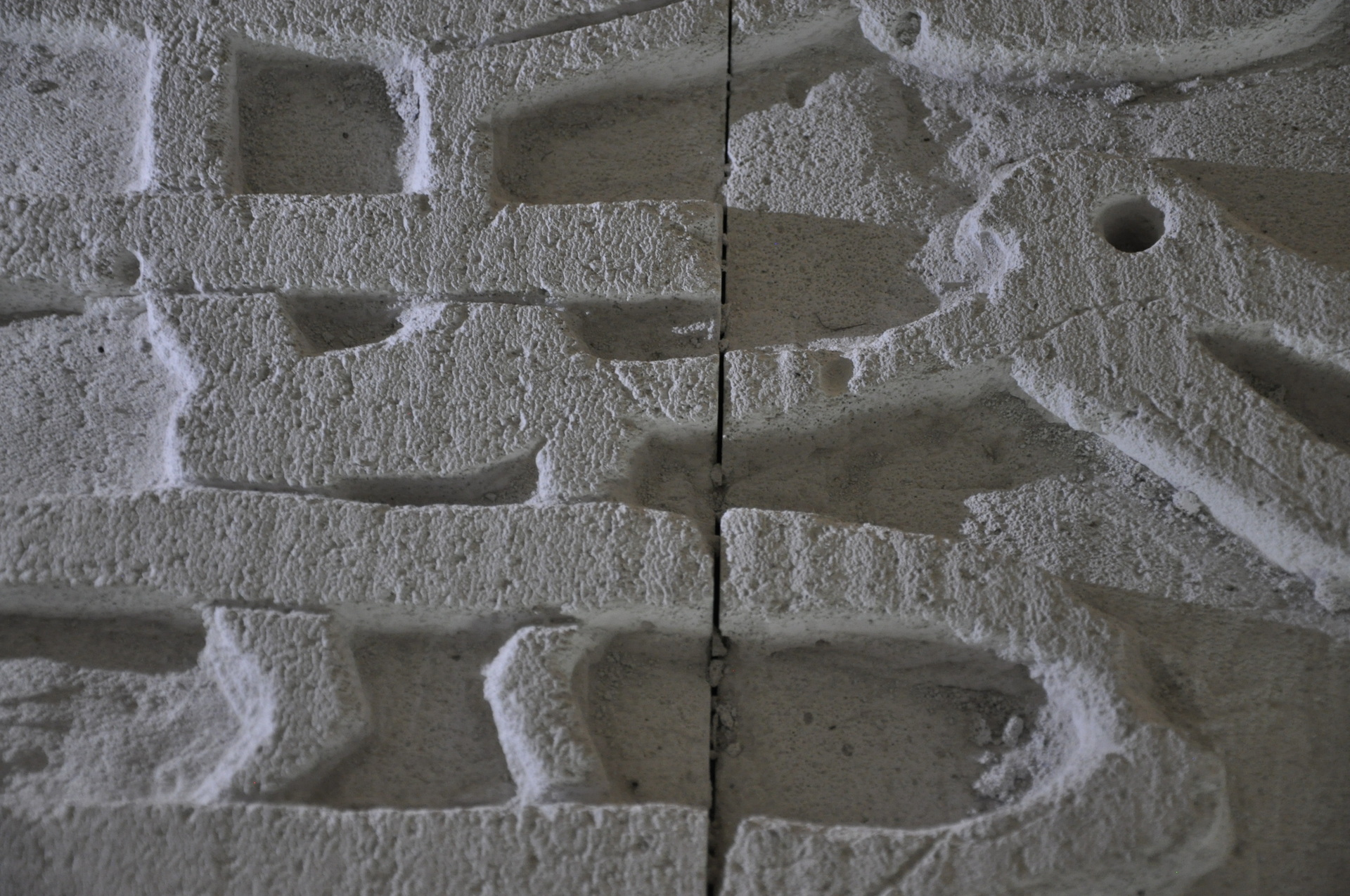
Using simple tools and gestures, participants scratched lines into large white blocks ofytong, a chalk-based material whose mineral composition, rich in lime, can contribute to thedeacidification of soil. It was a subtle but intentional choice: the very act of creation was, initself, an act of giving back. The artwork wasn’t meant to last. It was meant to return to the earth.
Van Uytven drew inspiration not from any one ancient culture, but from a universal tradition that spans continents and centuries: the
ritual of tracing, carving, marking, and offering. Across time, humans have made large-scale drawings in the land, not for decoration, but toactivate, to bless, to ask, and to thank. Geoglyph stood in that lineage.
The corridor became a sacred surface. Every mark was a gesture of connection, to the planet, to each other, and to the unknown. The 2000 square metres of soft white stone, slowly etched by hundreds of hands, became a living map of presence, movement and intent. There was no fixed design, no prescribed meaning. What emerged was shaped by the collective energy of those who entered and participated.
Just as his earlier works explored how people relate to grief, loss, and memory, Geoglyphasked what it means to honour the ground itself, not as a backdrop, but as a living body. Here, the artistic gesture became a form of care. A silent ritual. A conscious scar.